

|
Commenced:
|
01/01/2010 |
|---|---|
|
Submitted:
|
02/02/2011 |
|
Last updated:
|
23/05/2018 |
|
Location:
|
Quinta do Vale, Benfeita, Arganil, PT |
|
Website:
|
http://www.permaculturinginportugal.net/ |
|
Climate zone:
|
Warm Temperate |


Quinta do Vale is a family-run permaculture smallholding of around 2 hectares in the mountains of Central Portugal. It's in the early stages of transformation from a somewhat neglected traditionally-cultivated farm to a permaculture demonstration and education site to include water-retention landscaping, forest gardens, no-till raised beds, medicinal gardens, off-grid renewable power generation, waste recycling, indigenous forest restoration, natural buildings, passive solar greenhouses and various land-based crafts.

Our steeply-terraced mountainside land presents some challenging constraints to permaculture landscaping and design so our particular emphasis is on designing to the existing microclimatic variations across the site. The site has a range of different aspects and habitats to work with, natural springs and, generally, year-round running water. Many fruit and nut trees/shrubs are already established and these plantings will form the basis of forest garden-style cultivation designed to improve soil health, water retention and fire resistance as well as provide eventual self-sufficiency in food.
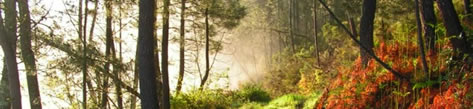
We are close to the reserva biogenética Mata da Margaraça, an indigenous forest reserve of various oaks, sweet chestnut, wild cherry, hazel, holly and their associated shrubs and understorey, and will be using this as the basic model for the gradual replacement of what is presently flammable, dry and impoverished pine and eucalyptus plantations above the cultivation terraces. We have enough forest land to be self-sufficient in sustainably-managed timber for building and firewood.
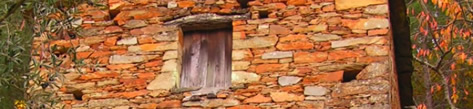
Various natural and traditional techniques are being used in building restoration and new construction, sourcing many of our materials on-site. Work is sympathetic to the unique traditions of the region.
In new construction we will be using a wide range of natural building techniques: roundwood timber framing, cob, straw-bale and lime and earthen plasters.

We're exploring a more distributed, decentralised concept of 'house' here. The communal/social functions of a home are grouped together in one building, but the more private spaces like bedrooms, bathrooms, studios, etc, are/will be dotted all over the land in the form of small natural buildings and more temporary/seasonal structures. Essentially the whole farm becomes part of the 'house'. The aim here is to introduce greater flexibility in our accommodation, to create synergistic relationships between rooms - like a bathroom-greenhouse combination - and to blur the conceptual separation between 'home' and 'out there' until eventually it ceases to exist. This arrangement also allows us to accommodate volunteers, interns, course and workshop participants as the quinta moves into its planned demonstration and education phase.
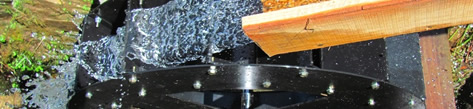
We are off-grid with hydro and solar power generation. The hydro component, an overshot water-wheel, is a locally designed and built system which provides our winter power.
We use composting toilets, both dry and flush (using vermicomposting for the latter), and integrate grey water treatment into cultivation.
We will also be exploring and developing the use of homeopathy in agriculture as well as cultivating a medicinal garden.

We plan to move into demonstration and education as it becomes realistic to do so. Right now, our efforts are going into getting ourselves established on the land, clearing and remedial work on existing plantings, extending plantings and increasing species diversity, implementing various water retention strategies including digging ponds and swales, assembling our basic infrastructure, building renovation and construction, and building raised beds for food cultivation.
We're now in a position to accommodate a limited number of volunteers.


Note: The various badges displayed in people profiles are largely honesty-based self-proclamations by the individuals themselves. There are reporting functions users can use if they know of blatant misrepresentation (for both people and projects). Legitimacy, competency and reputation for all people and projects can be evidenced and/or developed through their providing regular updates on permaculture work they’re involved in, before/after photographs, etc. A spirit of objective nurturing of both people and projects through knowledge/encouragement/inspiration/resource sharing is the aim of the Worldwide Permaculture Network.
 |
MemberA member is a permaculturist who has never taken a PDC course. These cannot become PDC teachers. Members may be novice or highly experienced permaculturists or anywhere in between. Watch their updates for evaluation. |
|---|---|
  |
Permaculture MatchmakerOne of these badges will show if you select your gender and the "I'm single, looking for a permaculture partner" option in your profile. |
 |
PDCPeople who claim to have taken a Permaculture Design Certificate (PDC) course somewhere in the world. |
 |
PDC VerifiedPeople who have entered an email address for the teacher of their PDC course, and have had their PDC status verified by that teacher. Watch their updates for evaluation. |
 |
PRI PDCPeople who’ve taken a Permaculture Research Institute PDC somewhere in the world. |
 |
PDC TeacherPeople who claim to teach some version of PDC somewhere in the world. |
 |
PRI TeacherWith the exception of the ‘Member’ who has never taken a PDC, all of the above can apply to become a PRI PDC Teacher. PRI PDC Teachers are those who the PRI recognise, through a vetting board, as determined and competent to teach the full 72-hour course as developed by Permaculture founder Bill Mollison – covering all the topics of The Designers’ Manual as well as possible (i.e. not cherry picking only aspects the teacher feels most interested or competent in). Such teachers also commit to focussing on the design science, and not including subjective spiritual/metaphysical elements. The reason these items are not included in the PDC curriculum is because they are “belief” based. Permaculture Design education concerns itself with teaching good design based on strategies and techniques which are scientifically provable. PRI PDC Teachers may be given teaching and/or consultancy offerings as they become available as the network grows. |
 |
Aid WorkerThe individual with this badge is indicating they are, have, or would like to be involved in permaculture aid work. As such, the individual may or may not have permaculture aid worker experience. Watch their updates for evaluation. |
 |
ConsultantThe individual with this badge is indicating they are, have, or would like to do paid permaculture design consultancy work. As such, the individual may or may not have permaculture consultancy experience. Watch their updates for evaluation. |
 |
Community ProjectCommunity projects are projects that help develop sustainable community interaction and increase localised resiliency. |


Swales
The development of a chinampa-style system of pond-fed mini swales on the lower main terrace of our mountainside land.
Yurt makeover
The yurt has been my home for 5 years now. It’s stood up to the extremes of Portuguese weather reasonably well, but the straps securing the covers rotted. It was time to replace them and come up with a better idea.
Sourdough bread
After accidentally discovering natural sodas, I’ve been keen to explore natural fermentation more. Sourdough bread was an obvious development. I already bake most of the bread eaten here and like to have a variety.
Refrigeration
Various solutions to efficient, low or zero-energy refrigeration on the quinta.
A portable rocket stove
How to construct a small portable rocket stove out of some junk.
We are crowdfunding!
Crowd sourcing financing to finish the main building which will become the education facility on the quinta, and supporting the local off-grid community in the process.
Completion of vermicomposting flush toilet
The completion and commissioning of this system which uses tiger worms to process sewerage.
Waterworks completed
The completion of the main 18,000-litre water storage and distribution system for the quinta.
Wood-burning masonry cookstove
The construction of a small masonry cookstove from adapted open source designs.
Grey water processing greenhouse continued
The next phase of building on the timber-framed greenhouse extension on the main building.
Grey water processing greenhouse
The start of a timber-framed greenhouse extension on the main building which will process grey water through a growing bed.
Earthen floor for the bathroom
The completion of the cob bathroom on the site with the installation of the earthen floor
Waterworks
The beginnings of the water storage and distribution system for water supply to the buildings and irrigation to the entire farm.
A flushing compost toilet
Creating a composting system for a flush toilet based on vermicomposting.
Catch the rain
The creation of storage tanks out of recycled IBCs for rainwater collected off the roof of one of our buildings.
Clay plastering
There has been so much going on – and ongoing – this summer, I’ve fallen way behind in recording it all. But having written about our earthen plaster recipes in July, it’s about time I posted what we’ve done with them so far.
Solar water heater
A simple, cheap and effective solar water heater for the cob bathroom on the quinta.
Cob and earthen plaster recipes
Recipes for the cob and earthen plasters we've used in natural building construction and renovations.
Crook chook
Natural remedies for a sick hen
Cob bread/pizza oven
The creation of a cob oven as part of the construction of an outdoor kitchen attached to one of our buildings.
Building renovation - another roof
Part of our evolving strategy to keep rainwater runoff out of our buildings naturally which, as they are cut into solid bedrock, presents some challenges.
Finally the new log store
Having set out to replace the log store last year - and ending up building a cob bathroom in the process - we finally completed the job.
On rocket stoves …
It seems rocket stoves are as much part of the natural building vernacular as glass bottles in cob walls, but theory is one thing, practice another. With a big push on the main building planned for this year, it was time to start experimenting.
Cob bathroom – finally the cob!
The bathroom has a post and beam construction so the cob walls are actually the last thing to be built. With winter fast approaching, we completed them inside a month.
Cob bathroom build - the plumbing and electrics
Details of the heating and lighting in our cob bathroom construction.
Alambique
Construction of a variation on a cob oven to run a pot still.
Vindima
Grape harvest and winemaking from old traditional varieties of grape on the quinta.
Cob bathroom
The construction of a cob bathroom on the quinta.
Tomatoes at the edge
Leaving tomatoes to grow naturally off the edges of terrace walls instead of stringing them up on supports proves very successful.
Growing ponds
A small expansion of about 1,000 litres’ capacity gives us a much deeper section to the top pond, as well as increasing the amount of bank in contact with water and allowing us to extend the growing area.
Rainwater harvesting
Work starts on excavating the site for a ferrocement water tank which will store rainwater harvested from the roof of the main building.
Evaporative refridgeration
An experiment to see if clay bricks or 'tijolos' with sand-filled cells could work in the same way as pot-within-a-pot coolers. They don't!
Making lime putty
We will be using lime putty to make mortar and plaster for various uses in building renovation, but the longer it matures, the better it gets so I made some well in advance of being needed.
Mega mulching
The initial applications of straw/hay mulch on the raised beds were very successful, so I am now incorporating layers of comfrey leaves beneath the surface straw/hay.
Installation of a living roof
The rear roof extension to the main building, constructed to prevent water running into the building, is turned into an extensive living roof.
Let there be light!
Inspired by YouTube videos of PET bottle lighting, we have installed them in the rear roof of the main building.
Transplanting olive trees
We have very few olive trees. Not enough for self-sufficiency, so it's always been the plan to increase the number. An olive grove being dug up further up the mountain gave us the opportunity to see how well a couple of mature trees would transplant.
Water of life
Finally some Spring rain gives us some relief from the drought. Spring plantings and provisional assessments of the success of the Hügelbeets.
Room at the back
Construction of a living roof at the back of the main building as part of a strategy to stop rainwater runoff running down the bedrock into the back of the building.
More ponds ... and drought
We have been digging ponds to retain water for longer in its passage through the quinta. Not just for irrigation, but to increase the range of environments we have for growing and to support a range of wildlife.
New fruit terraces
It’s been the plan this winter to extend the growing areas and to clear them of nettles, brambles, couch grass, bracken, etc, before planting a lot more trees, shrubs and fruit bushes.
Chicken compound
The chicken suite is now complete: coop, permanent compound and tractor.
Geodesic dome chicken tractor
The quest for a lightweight chicken tractor for putting the chickens to work on the quinta.
Chicken quarters
It’s been the plan from day one to keep chickens, though it’s taken rather more days than that to get around to it. Keeping chickens is one thing. Exactly how to keep them is another. Free range? Tractor? Permanent pen?
Woodwork
Work has started on woodland clearing and diversification, turning the monoculture of Maritime pines we inherited with the quinta into a more biodiverse, edible and less flammable forest.
Hydropowered
After 2 years of tinkering and a lot of ups and downs, our water wheel is finally able to charge the batteries. And this despite the failure of the winter rains to so far materialise.
Seed saving gets political
Saving seed to plant next year with enough over to share with friends and neighbours could soon be literally illegal. Technically, in Portugal it already is.
Pond expansion
As mentioned at the end of the recent post on the ponds, I wanted to make the top pond larger and deeper to provide more variety in aquatic environment and a larger area of water around and in which to grow.
Making yoghurt
How to make yoghurt with a cool box, some insulation, a hot water bottle and a cat.
Ponds
I have been thinking for a while now about ways to retain water for longer in its passage through the quinta. Not just for irrigation purposes, but to increase the range of environments we have for growing and to support a greater diversity of wildlife.
Pine wilt nematode
Pinewood nematode, pine wilt nematode, pine wilt, pine wilt disease … all names given to the disease affecting rapidly growing numbers of the Maritime pines (Pinus pinaster) which form the vast bulk of Portugal’s forests.
October garden
On recent evenings it’s still been 20°C at 10pm with the yurt roof open to clear skies and the garden is showing few signs yet of slowing down for winter. If anything, we have more peppers and tomatoes coming on now than we did in August and September.
Mangelwurzels
Mystery beet seedlings from the market grow into something surprising ... and surprisingly good.
Companion planting update
In a previous post, I described what happened with my inadvertent experiment with lovage (Levisticum officinale) as a companion plant. Now there's a new twist.
Vegetable garden update
A good rain and a few cloudy days have completely revitalised the vegetable garden, emphasising again that adequate watering and shading are keys to successful growing here.
Stone steps
The terraces on this quinta are well connected by sloping ramps and dozens of schist stone staircases, but the route we use most frequently between yurt and car has, until now, involved a scramble up a slope using damson trees as handrails.
Flower power
One of the most rewarding aspects of starting to explore polyculture and companion planting in the new raised beds have been the effects of growing flowers – both ones we’ve planted and ones that grew themselves – amongst the vegetables.
New floors
As well as work on the outside of the larger building, we’ve also stripped out the floor in the left half of the building in preparation for reflooring and started cleaning and preserving the chestnut timbers.
Solar-heated outdoor shower
The solar heating system first put together in May proved workable so all that remained was to construct a shower cubicle. This was done with a stone floor and walls woven from bamboo and acacia.
Stairs
After a break of the best part of 3 months, we’ve been able to start work on building renovations again. The first priority is to complete the roof of the larger building, and to do that, we need to work on the external staircases.
Companion planting
Some sources says Lovage (Levisticum officinale) is the magic bullet of companion planting, others that it's allelopathic. Who's right and who's wrong? Or is there more to it?
Everything's coming up vegetables
Luciousness and deliciousness as the vegetable gardens start to yield fruit.
Yurt shading
It’s not rain that’s the problem when it comes to living in yurts in this climate, it’s the sun. The sun rots the canvas covers, and under the glare of the Portuguese summer sun, even a heavy 12oz canvas cover like ours will only last 2-3 years ...
Blighted potatoes
The recent untypical weather patterns have been wonderful for bringing the garden on. Wonderful for bringing on the various fungal diseases that thrive in warm, damp, humid conditions too …
Solar water heating: part 1
The first part of a solar water heating system to provide hot water for showers and living accommodation is under construction.
Hamish
A very special individual joins our project ...
Stopping for breath
With daily attention inevitably circling around all that still needs to be done to convert this land into a fully productive, self-sufficient and sustainable source of food and shelter, sometimes it’s good to stop for a breath or two.
Plumbing
Water coming out of a tap into a kitchen sink. A very ordinary photo of a very ordinary process. But when your water supply has been fetched by the bucketful from the nearby waterfall for the last year, it's a little less ordinary.
Strawberries
Discovering patches of ripe strawberries you’d almost forgotten you planted just has to be one of the greatest pleasures of growing your own! Somehow it’s even better than picking them from the beds you’ve carefully sown and nurtured.
Grapeleaf blister mite
This is what damage by the grape erineum mite or grapeleaf blister mite, Colomerus vitis, looks like. We're using canopy management to deal with grape diseases rather than spraying.
Roundwood framed outdoor dining table and seats
Making an outdoor table with integral bench seats from roundwood poles and lashing.
Polyculture planting schemes
This year’s plantings in our newly-created raised beds and Hügelbeets are the beginnings of a bigger, more diverse, species-rich and permanent scheme with more forethought and long term vision than our temporary military-style vegetable plot of last year.
Housework
Both buildings on the quinta are being worked on at the moment. A while ago we fitted chestnut doors and windows to the smaller building, and today it got a new roof.
Slugging it out
One of the main downsides to using mulch on beds is that it provides an optimum environment for the slugs. With our present duck deficiency, I have been trying a few other natural methods for slug control.
Bamboos
If the potatoes are behaving as if they’re on steroids, you can almost see the bamboo growing.
Potatoes on steroids
Or so it seems. I'm having to add a new layer to the potato box every 4 days. And this even before they had their first dose of nettle liquid plant food that has been fermenting in a barrel for them and the tomatoes …
Lowering poles
With all this raising, there had to be some lowering. Balance … Specifically, the old electricity pole right by the larger of the two buildings on the quinta.
Still more raised beds
Raised bed building is almost complete now, and planting well under way.
More raised beds
Having completed the raised beds on the yurt terrace, I’ve moved on to the terrace immediately below the larger of our two buildings.
Potato bin
Ever since first reading about cultivating potatoes vertically rather than horizontally, I’ve been wanting to try this, so in between planting trees and raising beds, I also made a raised potato bed.
Plant trees ...!
The urge to plant trees has been so strong recently I've even been dreaming about it night after night. So we've been busy getting the transition of part of the farm to forest garden underway. But then something different turned up ...
Beds raised, and Springing things
Spring is finally in the air after some welcome rain and our new raised beds are almost ready for their first growing season.
Never count your chickens before they are hatched ...
... or your alternators before they're run in. Another setback for our experimental water wheel power generation project. The new permanent magnet alternator shipped all the way from the US is a big disappointment. But we are not deterred!